Starting a new business is exciting, but before you launch, one of the most important steps is to choose the right company structure. When you startup a company in India, you'll usually find three common options to register your business:
Designed for solo entrepreneurs who want limited liability protection.
Combines partnership flexibility with limited liability protection.
The most preferred structure for startups planning to scale and raise funding.
Each of these structures has its own advantages, limitations, compliance requirements, and suitability for different kinds of businesses. In this guide, we'll explore them in detail to help you decide which one is best for your startup journey.
The foundation of every successful business lies in the structure you choose. Whether you are building a small consultancy firm, a tech startup, or an e-commerce platform, the business structure will influence:
In short, when you startup a company in India, this decision shapes your growth path.
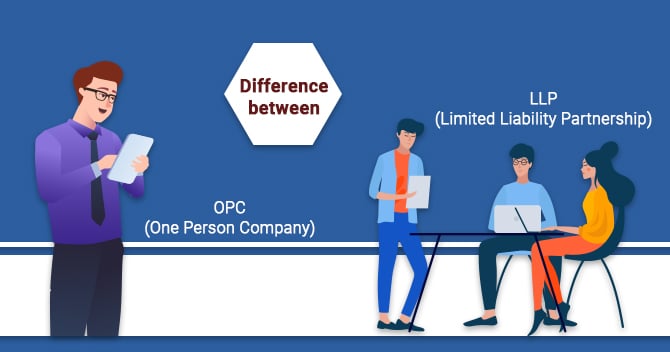
An OPC is designed for solo entrepreneurs who want the benefits of a company but don't have co-founders. It allows you to operate as a separate legal entity, unlike a sole proprietorship, and protects your personal assets from business liabilities.
Best For: Freelancers, consultants, or solo founders planning to startup a company in India with small-scale operations.
An LLP is a blend of a partnership and a private company. It provides the flexibility of a partnership but ensures that partners' liability is limited to their capital contribution.
Best For: Professional firms, small family businesses, and startups with 2 or more partners that don't require heavy external funding.
A Private Limited Company (Pvt Ltd) is the most preferred structure for startups in India, especially those planning to attract investors, scale rapidly, or eventually go public.
Best For: Startups with growth potential, tech companies, e-commerce ventures, or anyone planning to startup a company in India with an aim to scale and raise funding.
| Factor | OPC | LLP | Private Limited |
|---|---|---|---|
| Ownership | 1 Owner | 2+ Partners | 2+ Shareholders |
| Legal Status | Separate Entity | Separate Entity | Separate Entity |
| Liability | Limited | Limited | Limited |
| Compliance | Low | Medium | High |
| Tax Rate | 22% Corporate Tax | 30% LLP Tax | 22% Corporate Tax |
| Funding Options | Very Limited | Limited | High (VCs, Angels) |
| Scalability | Low | Moderate | High |
| Ideal For | Solo Entrepreneurs | Service Firms | Growth-Oriented Startups |
You're a solo entrepreneur and want simplicity with legal protection.
You have partners and want a balance of flexibility and protection without much compliance.
You plan to raise funds, expand aggressively, and build a scalable business.
For most ambitious founders planning to startup a company in India, a Private Limited Company is the best choice.
While costs vary based on services and government fees, here's a rough idea:
₹7,000 – ₹12,000
₹8,000 – ₹15,000
₹10,000 – ₹20,000
(Excluding professional consultancy and compliance fees.)
On average, 7–15 working days depending on government approvals and documentation.
OPC is the cheapest for solo founders, while LLP is cost-effective for partnerships.
Yes. Foreigners can register a company in India, but Private Limited is usually preferred for attracting foreign investments.
A Private Limited Company is the best option for fundraising and scaling.
Yes, both OPC and LLP can be converted into a Private Limited Company if your business grows.
Our experts at Maksim Consultants can guide you through the entire process of setting up your company in India. We'll help you choose the right structure based on your business goals and handle all the legal formalities.
Get Professional Advice Today